
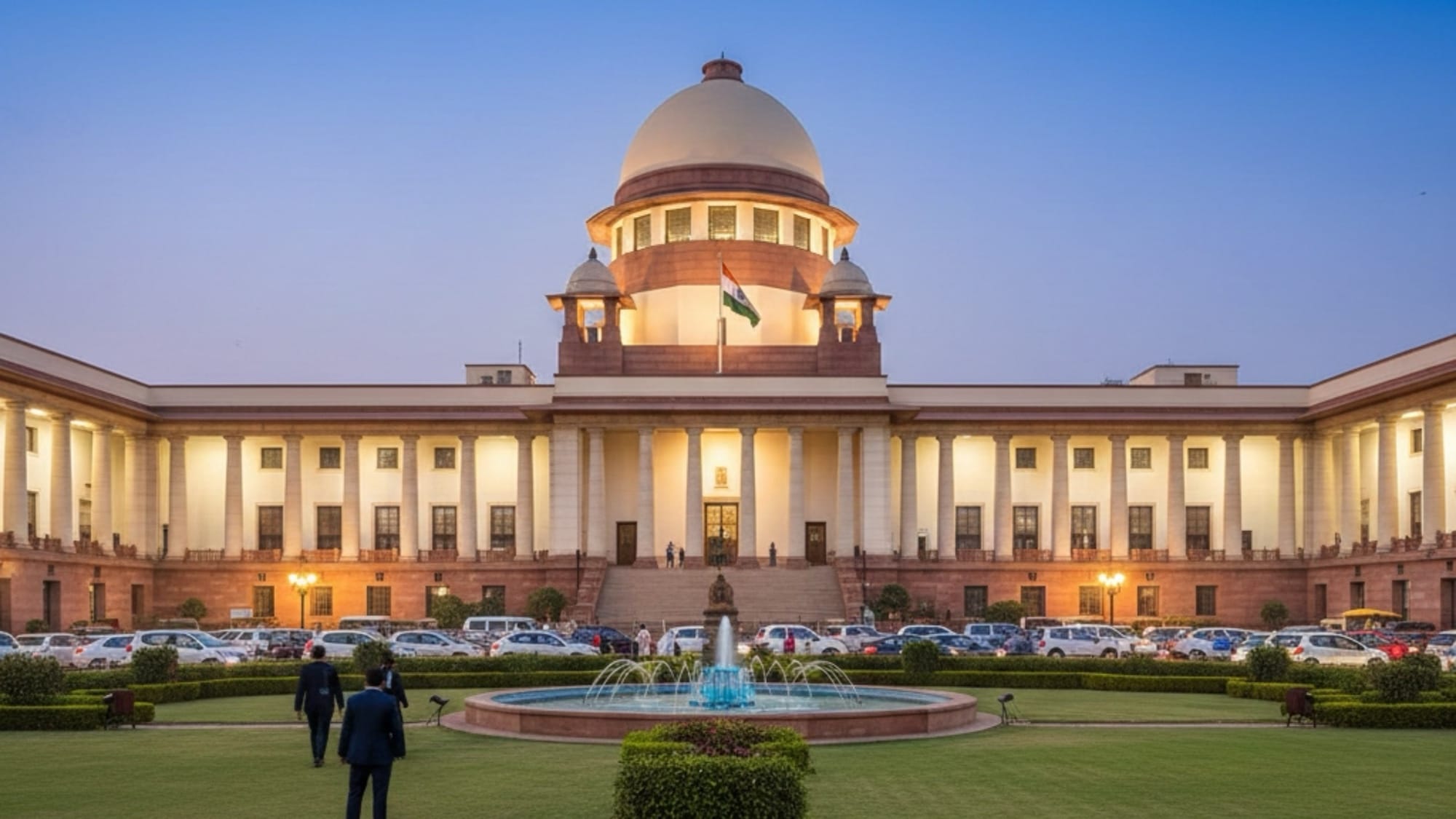
Supreme Court Dismisses Plea Against AIIMS INI-CET Institutional Preference Quota
In a major legal update for postgraduate medical aspirants, the Supreme Court of India has refused to interfere with the ongoing admission policy, dismissing a writ petition that challenged the institutional preference quota in the INI-CET examination. The INI-CET exam governs postgraduate medical admissions to AIIMS and other premier Institutes of National Importance.
The Petitioner’s Claim
The petition was filed by Dr. Sukrit Nanda M, a 23-year-old PG aspirant who secured an All India Rank of 287 (99.655 percentile) in the INI-CET exam. Despite opting for six disciplines across 17 institutes, she failed to secure a seat in the initial counseling rounds. The plea alleged that AIIMS was allocating over 50% – and in some disciplines, up to 100% – of its seats to candidates qualifying under “institutional preference” (AIIMS’s own MBBS graduates), thereby bypassing higher-ranked external candidates.
AIIMS Defends the Roster System
Defending its admission process, AIIMS New Delhi informed the court that it strictly follows the Supreme Court’s previous rulings, including the Saurabh Chaudri vs Union of India (2003) judgment. The institute clarified that institutional preference never exceeds 50% of the total unreserved seats in any institution, nor does it exceed 50% of the MBBS seats at that specific institution.
AIIMS further stated that the actual number of seats allocated under this preference varies from 18% to 24% of all available PG seats. Importantly, they noted that there is no subject-wise reservation for institutional preference; the allocations can vary across disciplines as long as the overall 50% ceiling is not breached. AIIMS argued that the petitioner’s failure to secure a seat was primarily due to her limited and restrictive choices during counseling, not a flawed implementation of the quota.
- Supreme Court: Private Medical Colleges Cannot Be Forced to Match Govt MBBS Fees
- AIIMS Delhi Issues Social Media Guidelines: Bans Unauthorised Use of Name and Logo
- RIMS Ranchi MBBS Scam: 12 Fake Admissions Found During Rape Case Probe
The Supreme Court’s Verdict
A bench comprising Justices P. S. Narasimha and Alok Aradhe declined to entertain the petition under Article 32 of the Constitution. However, the apex court explicitly clarified that the larger legal question regarding the institutional preference limits has been kept open for consideration in an appropriate future case.



Pingback: Supreme Court: Private Medical Colleges Cannot Be Forced to Match Govt MBBS Fees - MedSnaps