
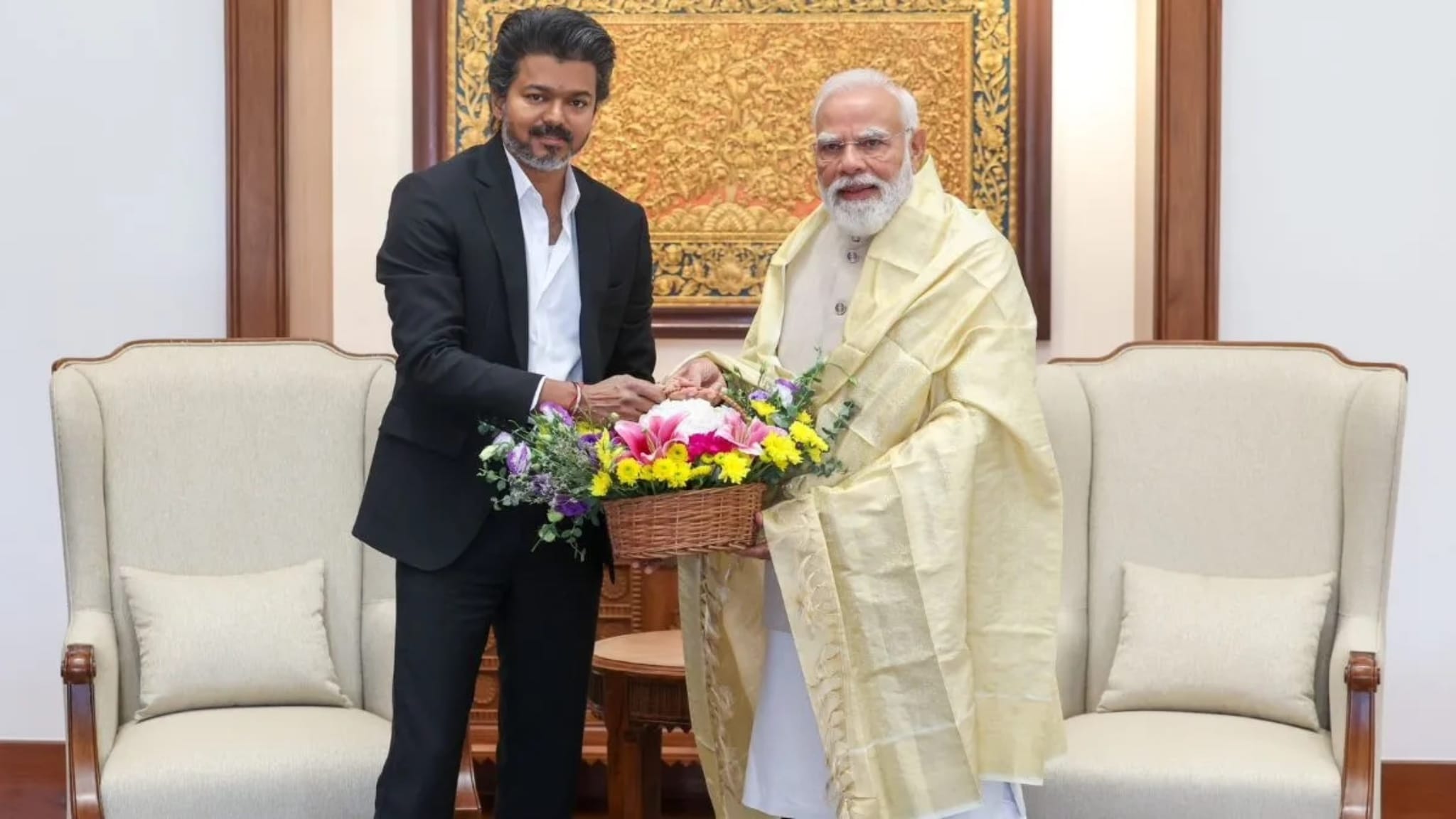
TN CM Vijay Opposes NEET at NITI Aayog, Demands MBBS Admissions on Class 12 Marks
The contentious debate over the National Eligibility cum Entrance Test (NEET) has officially been reignited at the highest administrative levels. Making his highly anticipated maiden appearance as the Chief Minister of Tamil Nadu, C. Joseph Vijay utilized the 11th Governing Council meeting of NITI Aayog in New Delhi to launch a fierce, principled critique of the centralized medical entrance exam.
Addressing the high-profile council chaired by Prime Minister Narendra Modi, CM Vijay formally appealed to the Union Government to scrap NEET-based admissions for state quota seats. His proposed alternative? Returning to a system where admissions to MBBS, BDS, and AYUSH courses are granted exclusively based on Class 12 public board examination marks.
“Shattered Hopes” and Structural Flaws
The newly-elected Chief Minister did not hold back in his assessment of the current system. Highlighting the state’s long-standing ideological opposition to NEET, Vijay argued that the centralized exam is fundamentally inequitable. He pointed out that the recent paper leak controversies and subsequent exam cancellations have not only shattered the hopes of lakhs of medical aspirants but have also exposed glaring “structural flaws” in the national testing framework.
“The Government of Tamil Nadu is committed to protecting the rights of our students,” CM Vijay stated passionately during the meeting. “The introduction of NEET has severely disadvantaged students from rural areas, government schools, Tamil-medium backgrounds, and socio-economically disadvantaged families.”
By relying on Class 12 marks, he argued, the state could restore a level playing field where consistent, school-level academic diligence is rewarded over a student’s ability to afford expensive, private coaching centers.
Pushing for a Second AIIMS in Coimbatore
Beyond the NEET debate, the Chief Minister laid out a broader, ambitious vision for Tamil Nadu’s healthcare infrastructure. In a significant move, he formally requested the Centre to establish a second All India Institute of Medical Sciences (AIIMS) in Coimbatore. Assuring complete state cooperation, Vijay declared that the Tamil Nadu government is fully prepared to immediately allocate the necessary land for the proposed premier medical institute, aiming to dramatically boost both healthcare delivery and postgraduate medical training in the region.
- MP MBBS Intern Stipend Hike: Government Approves ₹21,500 Pay
- NEET PG 2026 Bilaspur Server Crash: Google Windows Open on Secure Exam Computers
- NEET PG 2026 Power Failure in Jaipur: NBEMS Announces Re-Exam on September 5
The Road Ahead
While CM Vijay’s demands strongly resonate with his political base and anti-NEET advocates across southern states, implementing this change remains legally and administratively complex. The Supreme Court has repeatedly upheld NEET as a necessary tool to maintain national academic standards and curb capitation fee rackets. However, with mounting pressure from state governments following recent operational failures by the National Testing Agency (NTA), the debate over centralized testing versus state autonomy is far from settled.
Chief Minister Vijay’s pitch highlights a genuine pain point: the undeniable advantage that wealthy, urban students have in cracking NEET via elite coaching institutes. However, reverting to Class 12 board marks isn’t a flawless solution. Due to massive disparities in syllabus difficulty and grading strictness across different state boards, raw 12th-grade marks cannot offer a uniform national benchmark. While the NTA’s recent failures absolutely demand strict, systemic reforms, scrapping a centralized exam entirely risks replacing one flawed system with another. The goal should be fixing the integrity of the entrance test, not lowering the standardized bar for medical competency.