
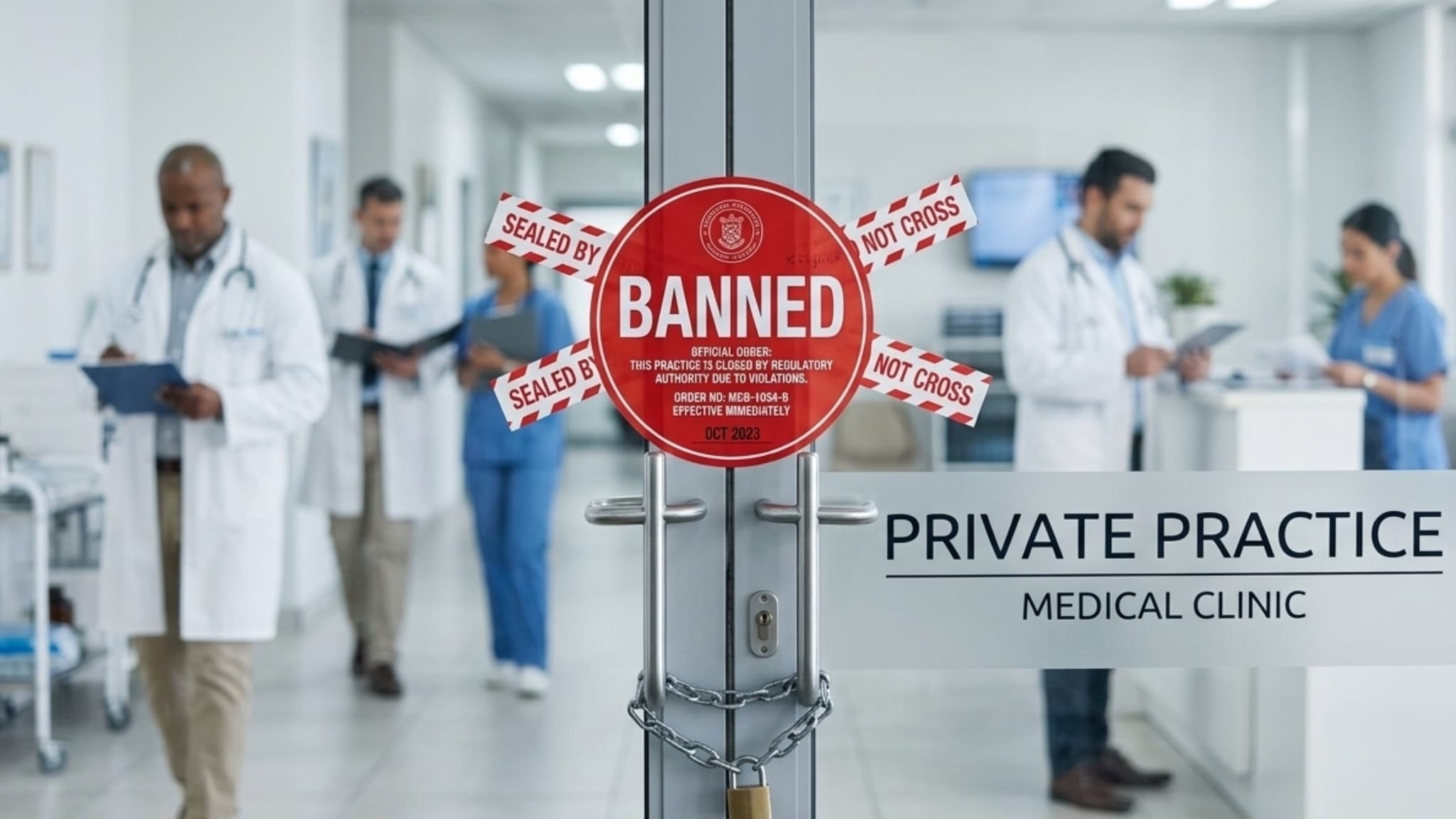
Tripura Cabinet Prohibits Government Doctors from Private Practice at AGMC and GBP Hospital
In a landmark healthcare policy decision announced on June 24, 2026, the Tripura Cabinet has prohibited faculty members and medical officers serving at Agartala Government Medical College (AGMC) and Govind Ballabh Pant (GBP) Hospital from engaging in private practice while holding government positions. The announcement was made by Cabinet spokesperson and Transport Minister Sushanta Chowdhury, “The Cabinet has taken a firm decision that doctors serving at AGMC and GBP Hospital will not be allowed to undertake private practice under any circumstances. This directive must be strictly followed by all concerned medical professionals,” Chowdhury said refering doctors working at the state’s premier public healthcare institutions must devote their full professional attention to government service.
Under the new policy, doctors who wish to continue private practice will have the option to resign from their government posts. The government has made it clear that simultaneous engagement in both government service and private clinical practice will no longer be permitted. Officials indicated that the proposal had been under discussion for several months and was eventually approved by the Cabinet following consultations with stakeholders and references to similar systems functioning in institutions such as AIIMS and certain state-run healthcare networks.
Also read: Bihar Private Practice Ban: Doctors Raise Concerns Over Discriminatory Order
20% Non-Practicing Allowance Introduced as Compensation
To compensate for the loss of private-practice income, the Tripura government has approved a 20% increase in basic pay as a Non-Practicing Allowance (NPA) for doctors and faculty members who comply with the new conditions. According to the government, the move is designed to ensure that specialists remain available within public hospitals throughout the day, thereby reducing delays in consultations and improving patient access to government healthcare services.
According to state officials, the policy structure aligns with successful healthcare delivery setups used at AIIMS New Delhi and in states like Tamil Nadu, following formal recommendations by an AIIMS expert delegation and the 16th Finance Commission. Alongside this ban, the government also approved recruiting 186 Technical Assistants to further reinforce state medical infrastructure. Cabinet has approved the recruitment of 186 Technical Assistants through the General Recruitment Board of Tripura (GRBT) as part of a broader effort to strengthen service delivery. Officials argue that the combination of a non-practicing allowance and additional manpower will improve accountability, increase specialist availability, and enhance patient satisfaction at AGMC and GBP Hospital, which together handle a significant proportion of the state’s tertiary-care workload.
also read: No Private Clinics During Duty Hours: NMC Cracks Down on Medical Ghost Faculty
A Bold Experiment That May Trigger National Debate
The decision is already generating discussion within the medical community. While proponents argue that full-time dedication to government institutions could improve continuity of care and reduce absenteeism, critics point out that a blanket ban on private practice may create recruitment and retention challenges, particularly in specialist disciplines where private-sector earnings significantly exceed government salaries. Whether a 20% NPA adequately compensates for the financial impact remains a key question likely to be debated by medical associations.
Notably, the Tripura government has described AGMC and GBP Hospital as a pilot model, with the possibility of expanding the framework to other institutions if outcomes are favorable. Health administrators claim that persistent public complaints regarding accessibility and specialist availability influenced the decision. As implementation guidelines and enforcement mechanisms are finalized, healthcare policymakers across India will be closely watching whether Tripura’s experiment leads to measurable improvements in patient care, or whether it creates new tensions between public service obligations and professional autonomy.