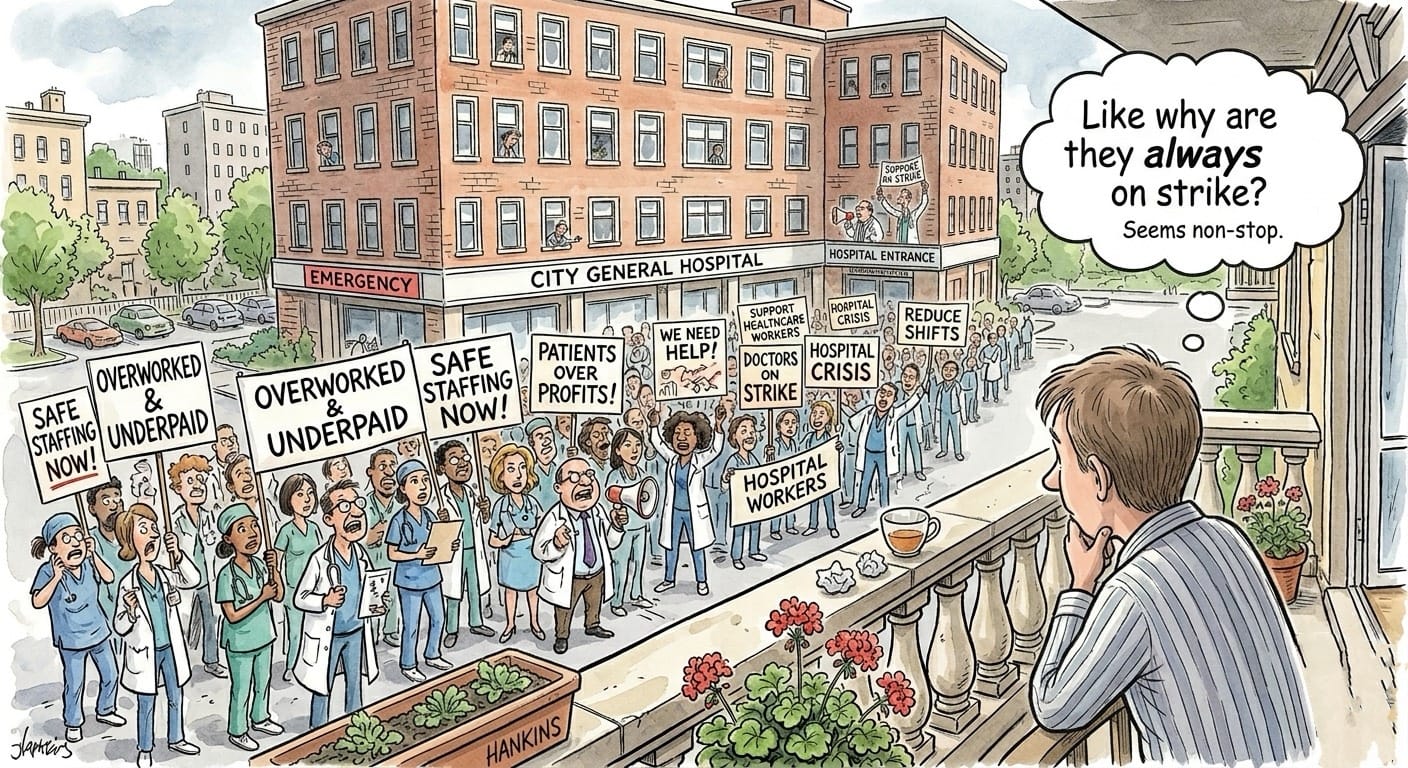
Why Do Doctors Keep Going on Strike Every Other Day? The Ground Reality of India’s Hospitals
It is an incredibly frustrating headline to wake up to: “Resident Doctors Declare Indefinite Strike.” For the general public, a doctor’s strike means canceled OPDs, delayed surgeries, and immense anxiety for families with sick loved ones. It is easy to view these protests as insensitive or greedy. After all, isn’t medicine a noble profession? Aren’t doctors supposed to serve the people no matter what?
Yes, they are. But the reality is that the doctors you see protesting on the streets are usually not senior consultants from luxury private hospitals. They are young Postgraduate (PG) Resident Doctors, the absolute backbone of India’s government healthcare system.
And they are not striking because they want to. They are striking because the system has left them with absolutely no other choice. Here is the ground reality of why doctors go on strike.
1. They Are Treated as Human Punching Bags
The most common trigger for a medical strike is workplace violence. When a government hospital is understaffed, underfunded, and lacks basic life-saving equipment, patients suffer. But the family’s anger doesn’t go toward the politicians or administrators who failed to fund the hospital; it goes toward the 25-year-old resident doctor standing in the ward.
Doctors are routinely beaten, abused, and verbally assaulted by mobs of patient relatives when outcomes turn tragic. When hospital administrations and local police fail to provide basic security, doctors are forced to strike just to demand the right to work without the fear of being physically attacked.
2. The 36-48 Hour Work Shift is Real
Imagine staying awake for 36-48 hours straight. Now imagine doing that while making split-second, life-or-death decisions, standing in an operating theatre, or resuscitating trauma patients.
Resident doctors in India routinely work 80 to 100-hour weeks. Sleep deprivation is treated as a standard part of medical training. They skip meals, miss family events, and push their bodies to the absolute limit to keep overcrowded wards running. When the sheer exhaustion reaches a breaking point and the government ignores their pleas for better working hours or hiring more staff, a strike becomes a desperate cry for survival.
3. Months Without Pay
There is a massive misconception that all doctors are wealthy. The young resident doctors running government hospitals are essentially students completing their specialized training (MD/MS). They rely on a monthly stipend to survive, pay rent, and eat.
In many states across India, these stipends are routinely delayed for three, four, or even six months at a time. Medical colleges illegally withhold their pay, yet expect them to show up for every brutal 24-hour shift. When months of requesting their rightful, basic salary yield nothing but empty bureaucratic promises, they have to put down their stethoscopes to be heard.
4. Taking the Blame for a Broken System
Doctors cannot save lives with bare hands. In many public hospitals, residents work in crumbling infrastructure where basic necessities like sterile gloves, emergency drugs, functional ventilators, or even clean drinking water are missing.
When a patient cannot get an MRI because the machine has been broken for six months, the doctor on duty is the one who has to break the news and face the family’s wrath. Doctors often go on strike to demand better infrastructure and resources – not for themselves, but so they can actually treat the patients lying in front of them.
The Bottom Line
Nobody hates a medical strike more than the doctors themselves. Leaving their patients goes against every instinct they have been trained to follow. But a healthcare system cannot run on the silent suffering and exploitation of its youngest doctors.
The next time resident doctors protest, remember: they are not fighting against the patients. They are fighting for a system where doctors can work safely, and patients can actually survive.