
Varanasi: IMS BHU Anaesthesia Resident Found Dead; 3-Page Note Recovered
The medical fraternity in Uttar Pradesh has been plunged into profound grief following the tragic demise of a 26-year-old junior resident doctor at the prestigious Institute of Medical Sciences, Banaras Hindu University (IMS-BHU) in Varanasi. The young medico, who was pursuing his junior residency in the Department of Anaesthesia, was found dead in his hostel room on Sunday night. Authorities strongly suspect it to be a case of suicide via a self-administered drug overdose.
The deceased has been officially identified as Dr. Ritwik Kundu, an MBBS graduate originally hailing from the Hooghly district in West Bengal. Known among his peers as a sociable student and an avid football player, his sudden death has left everyone in shock across the university campus.
The Heartbreaking Discovery at Sushrut Hostel
According to preliminary reports, the incident came to light late Sunday night. Dr. Kundu had not reported for his clinical duties since Saturday afternoon, which prompted his concerned colleagues to try and contact him. When he repeatedly failed to answer calls or reply to text messages, his batchmates grew alarmed and rushed to his room on the sixth floor of the university’s Sushrut Hostel.
Upon finding the room locked from the inside with no response to their continuous knocking, the students immediately alerted the university’s Proctorial Board and the local hostel administration, who subsequently called the police.
Also read: Bareilly: FIR Against 4 Senior Doctors After MD Student’s Suicide Attempt
An Intravenous Overdose and a 3-Page Note
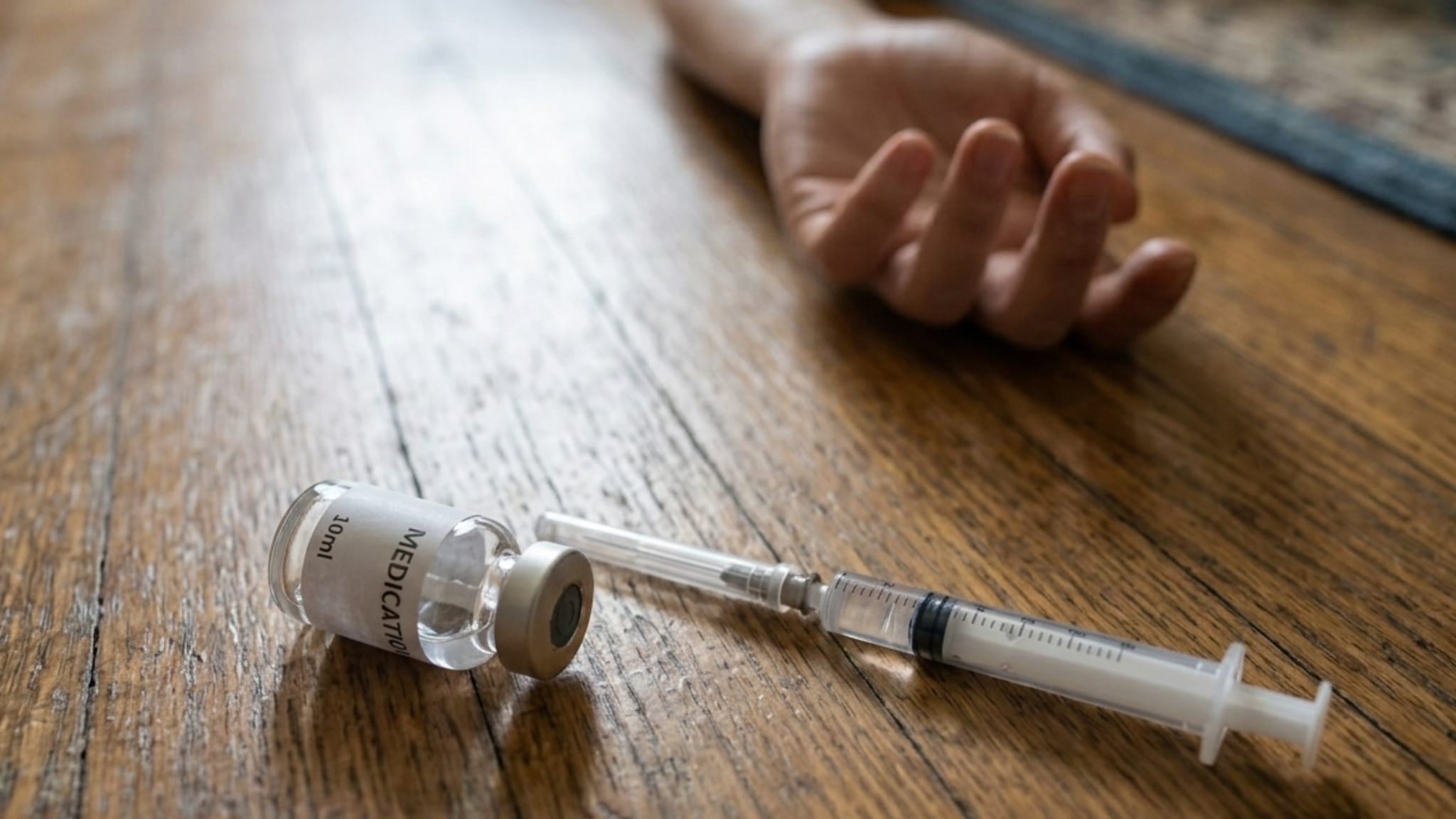
When law enforcement officials broke open the heavy wooden door, they were met with a devastating sight. Dr. Kundu was found lying unresponsive on the floor of his room. Police investigators recovered a medical cannula attached to his hand, alongside an intravenous (IV) drip and several empty vials of high-dose anesthesia medication nearby, pointing heavily toward a lethal, self-administered overdose.
During a thorough search of the room, forensic teams recovered a poignant, three-page suicide note purportedly written by the young doctor. In the heartbreaking letter, he repeatedly apologized to his parents for taking the extreme step, explicitly stating that he was unable to cope with the mounting pressures of life and felt he had failed to live up to their expectations.
“Please take care of my parents. I was their biggest hope. But I could not live up to their expectations… Throughout my life, I kept running away from reality. Today I am running away forever,” the letter read. He further requested that no one be held responsible for his death, expressing a deep sense of internal despair and claiming he was “not worthy of living on this earth.”
Police Action and Verified Statements
The local authorities moved swiftly to secure the scene. Speaking to the press, SHO Rajkumar Sharma of the Lanka Police Station provided a verified statement regarding the active investigation.
“Upon receiving information from the university administration, our team reached the Sushrut Hostel and found the room locked from the inside. We broke open the door and found the junior doctor deceased,” SHO Sharma confirmed. “A three-page suicide note was recovered from the spot, which indicates he was suffering from severe depression and personal distress. We have taken the body into custody and sent it for a mandatory post-mortem examination to officially ascertain the exact medical cause of death. His family in West Bengal has been informed, and we are currently recording statements from the students living in the adjacent rooms to understand his recent state of mind.”
The bottom line: A Deepening Crisis in Medical Education
This incident has reignited a fierce, urgent debate regarding the toxic culture and crushing workload imposed on junior doctors across Indian medical institutions. The tragedy at BHU comes on the heels of the recently published FAIMA RMS 2.0 survey, which alarmingly revealed that over 87% of resident doctors suffer from severe burnout, and more than half have contemplated abandoning their residencies due to unmanageable stress and 36-hour continuous shifts.
Another brilliant young life has been extinguished by a system that routinely pushes its doctors far beyond the limits of human endurance. While the suicide note points to profound personal distress, we cannot ignore the suffocating environment in which these junior doctors operate. Residency programs in India often function as high-stakes pressure cookers characterized by chronic sleep deprivation, severe understaffing, and toxic academic hierarchies. When 87% of our future specialists report severe burnout, individual tragedies like Dr. Kundu’s are a symptom of a catastrophic systemic failure. We are losing our healers to despair, and the medical education infrastructure must immediately mandate mental health interventions before another bright mind is lost.

Pingback: Dr. Harsh Pandya Suicide Case: 4 Senior Doctors Suspended at GMC Surat - MedSnaps