From Pocket Scanners to AI Scribes: The Biggest Medical Innovations from the 2026 India AI Summit
Artificial Intelligence is officially stepping out of the lab and directly into the wards, shifting its focus from futuristic theory to solving everyday clinical burnout. The recent India AI Impact Summit 2026 showcased deployment-ready tools from ambient listening scribes to pocket-sized radiology that are set to revolutionize how you practice medicine. Here is a rapid breakdown of the biggest tech upgrades heading to a clinic near you.
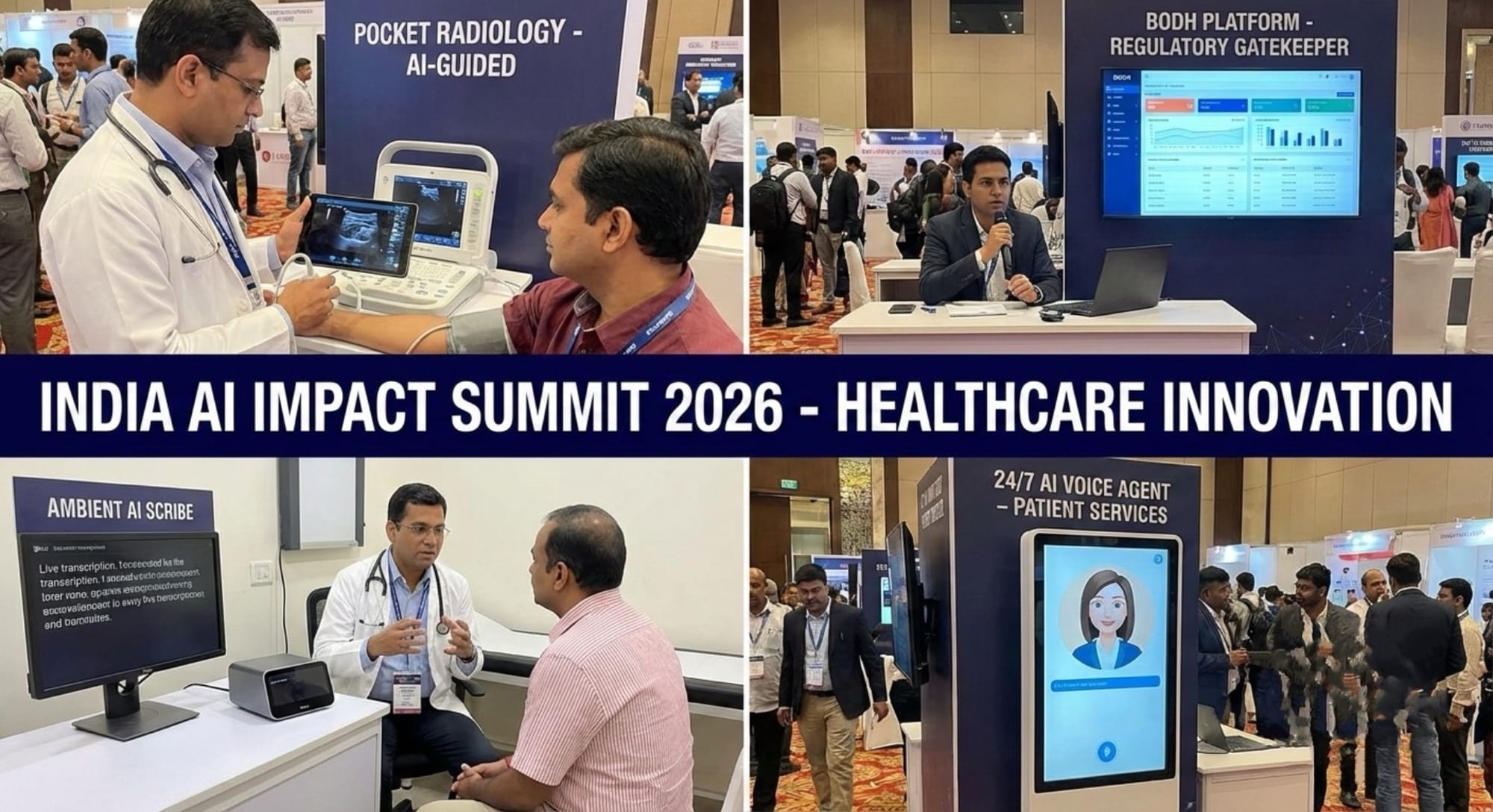
1. The “Invisible Scribe” Ending Doctor Burnout
• The Tech: Ambient Listening AI (like DeepScribe and Microsoft Dragon).
• How It Works: This voice-recognition AI sits quietly in the background (via an app or microphone) during a patient consultation. It listens to the natural conversation and instantly generates a structured clinical note (SOAP format), completely extracting the relevant medical history, symptoms, and even billing codes.
• The Impact: It aims to eradicate the biggest cause of physician burnout electronic health record (EHR) paperwork. Doctors can maintain eye contact with patients instead of staring at a screen.
2. The Pocket-Sized Radiology Department
• The Tech: AI-Guided Handheld Scanners (like Butterfly Network and Qure.ai).
• How It Works: These portable ultrasound probes plug directly into a smartphone. The integrated AI acts like a GPS, guiding even non-specialist doctors on exactly how to angle the probe. Once the image is captured, AI instantly highlights abnormalities like subtle lung nodules or fractures.
• The Impact: It brings premium, specialist-level diagnostic power to rural clinics and emergency rooms, drastically reducing the need to wait for a senior radiologist’s report.
3. The 24/7 Virtual Front Desk
• The Tech: Voice-First AI Agents (like Prosper AI and Hippocratic AI).
• How It Works: Unlike frustrating automated phone menus, these are conversational AI agents that handle patient calls instantly, 24/7. They can schedule appointments, handle hospital intake, and answer common non-diagnostic questions.
• The Impact: It slashes administrative overhead for hospitals and specialty clinics, ensuring patients never have to wait on hold just to book a follow-up.
4. India’s New “AI Gatekeeper”
• The Tech: The BODH Platform (Benchmarking Open Data Platform for Health AI).
• How It Works: Launched at the India AI Impact Summit 2026, this is the government’s new mandatory checkpoint. Before any AI tool (like the ones above) can be officially deployed in Indian hospitals, it must be tested by BODH.
• The Impact: Many AI models are trained on Western datasets. BODH ensures these tools are tested for clinical accuracy and bias against Indian demographics, ensuring an AI doesn’t misdiagnose local patients
“The consensus from health leaders and global experts is clear: AI will not replace clinicians, but clinicians who use AI will rapidly outpace those who don’t. With new regulatory gatekeepers like the BODH platform ensuring these tools are safe for Indian demographics, adapting to these digital co-pilots is about to become an essential medical skill.”