Supreme Court: Private Medical Colleges Cannot Be Forced to Match Govt MBBS Fees
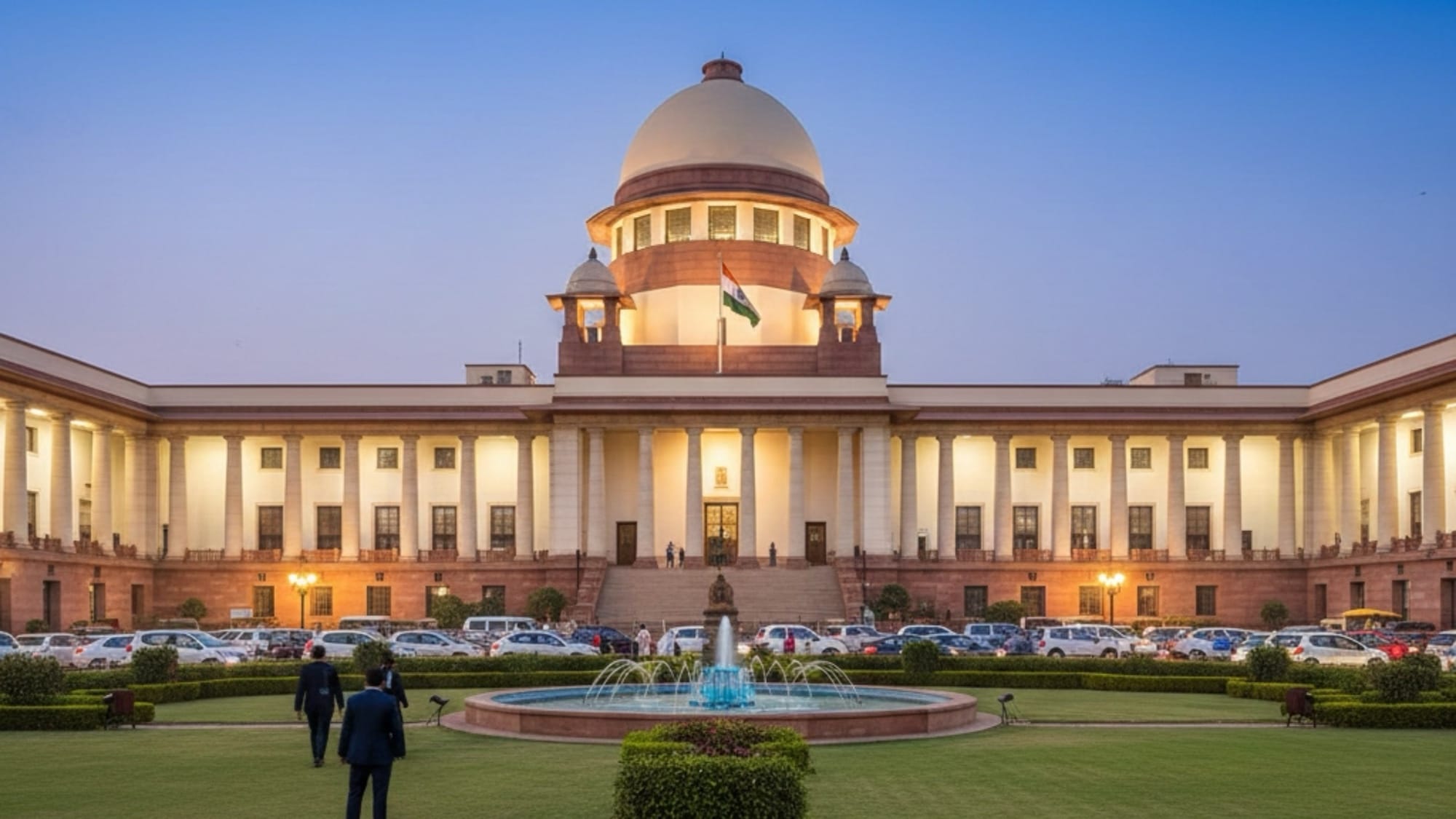
In a significant legal blow to medical aspirants hoping for affordable education, the Supreme Court has explicitly stated that private medical colleges cannot be forced to match the highly subsidized fee structures of government institutions. This ruling brings the harsh financial realities of pursuing an MBBS degree in India into sharp focus.
The EWS Conundrum in Private Colleges
A division bench comprising Justices B.V. Nagarathna and Joymalya Bagchi dismissed a petition filed by a 22-year-old NEET-UG 2025 candidate from Rajasthan. The student, belonging to the Economically Weaker Section (EWS) category, approached the apex court after being allotted a general category seat in a private medical college during the third round of counseling.
He argued that the annual tuition fee, which ranged from ₹18.9 lakh to ₹25 lakh, was entirely out of reach for his family. Because the EWS criteria strictly cap a family’s maximum annual income at ₹8 lakh, the petitioner contended that the exorbitant private college fees make the reservation practically meaningless for genuinely underprivileged students.
The petitioner’s counsel, Rishabh Sancheti, also highlighted a February 2022 office memorandum from the National Medical Commission (NMC). This memorandum recommended that 50% of seats in private medical colleges and deemed universities should charge fees at par with government institutions to ensure affordability.
Also read: Supreme Court Dismisses Plea Against AIIMS INI-CET Institutional Preference Quota
“We Need Doctors in This Country”
Despite these arguments, the Supreme Court remained firm on the fundamental financial differences between public and private institutions. Justice Nagarathna observed that while government colleges receive extensive state grants and subsidies, private colleges are entirely self-financing.
“You cannot say private educational institutions shall charge the same as government institution,” the bench noted, referencing the landmark TMA Pai judgment which banned capitation fees but firmly permitted standard tuition fees.
The court warned that forcing private medical colleges to slash their fees would completely compromise their ability to function and could ultimately lead to their closure. “Assistance of private medical colleges to the State in the field of medical education will stop then… We need doctors,” Justice Nagarathna remarked.
When confronted with the sheer inability of the EWS candidate to pay the ₹19 lakh fee, the bench offered a blunt legal reality: “If you are unable to pay, get a scholarship or any subvention scheme”. The apex court subsequently dismissed the plea, upholding the Rajasthan High Court’s earlier ruling that validated the fee structure set by the State Fee Regulatory Committee, though it kept the larger question of law open for future adjudication.
- MP NEET PG State Quota 2026: Service Bond, Discontinuation Penalty, and Stipend
- NEET PG 2026 Result Declared: Direct Link, Scorecard, and Cut-Off Marks
- AIIMS Jodhpur: PG Resident Dr. Raj Naresh Found Dead; Toxicity and Denied Leave Alleged
The Bottom Line
The Supreme Court’s ruling lays bare a devastating paradox in Indian medical education. Legally, the bench is absolutely right – private colleges cannot survive without adequate capital to maintain faculty and complex clinical infrastructure. However, morally, this creates a dead-end for brilliant students from poor backgrounds. If an EWS quota exists but a student still has to shell out ₹20 lakh a year, the reservation is practically a mirage. Instead of trying to bankrupt private institutions by forcing them to slash fees, the government must step up. We desperately need a robust, state-backed subvention or scholarship scheme so that poverty doesn’t remain the ultimate disqualifier for future doctors.